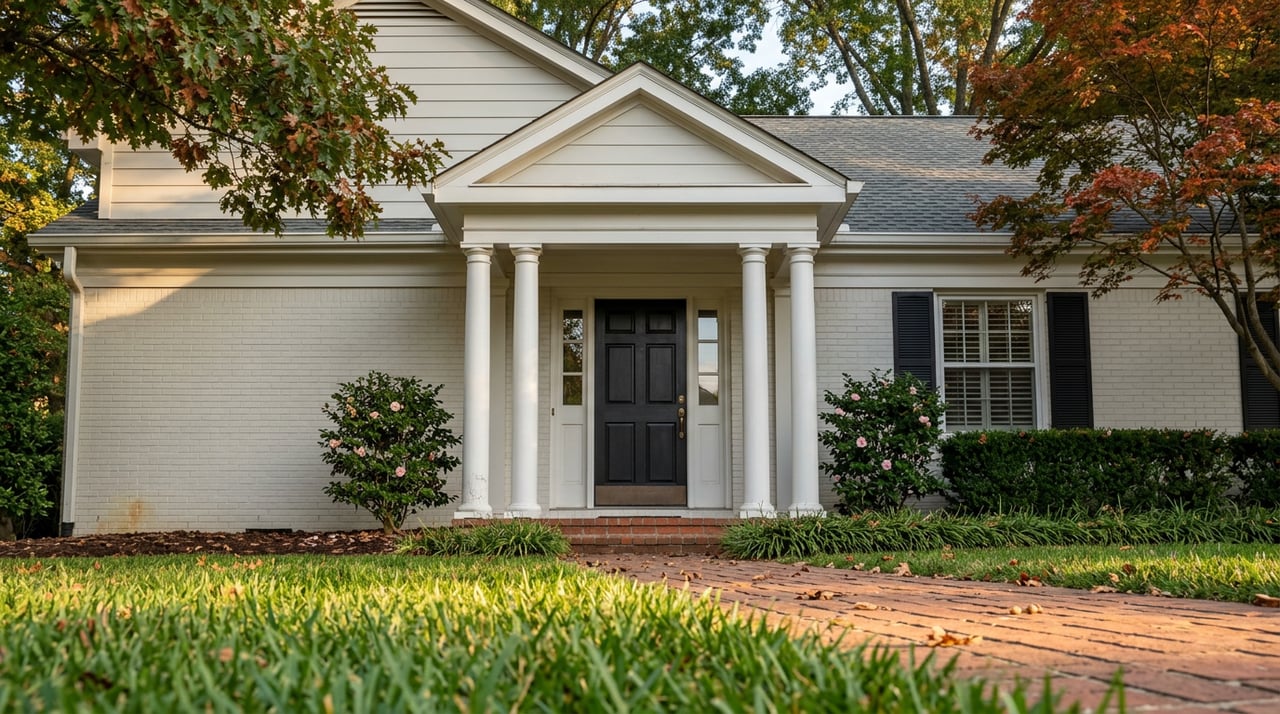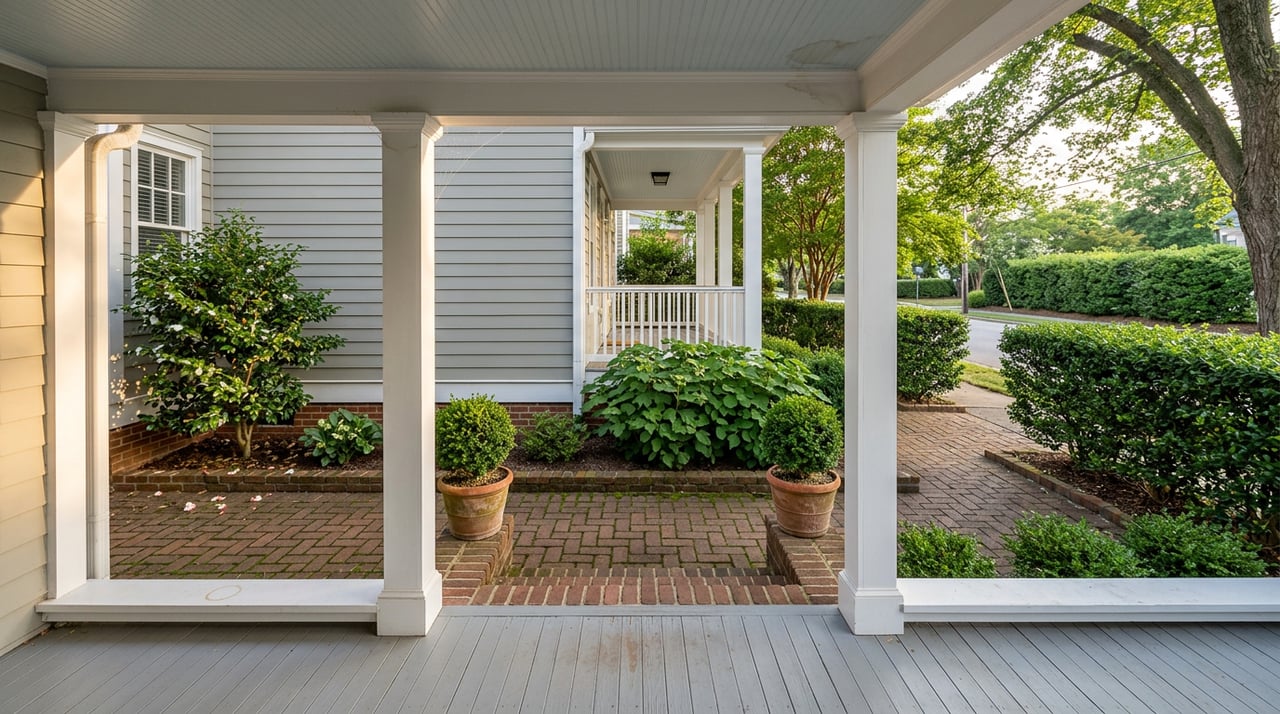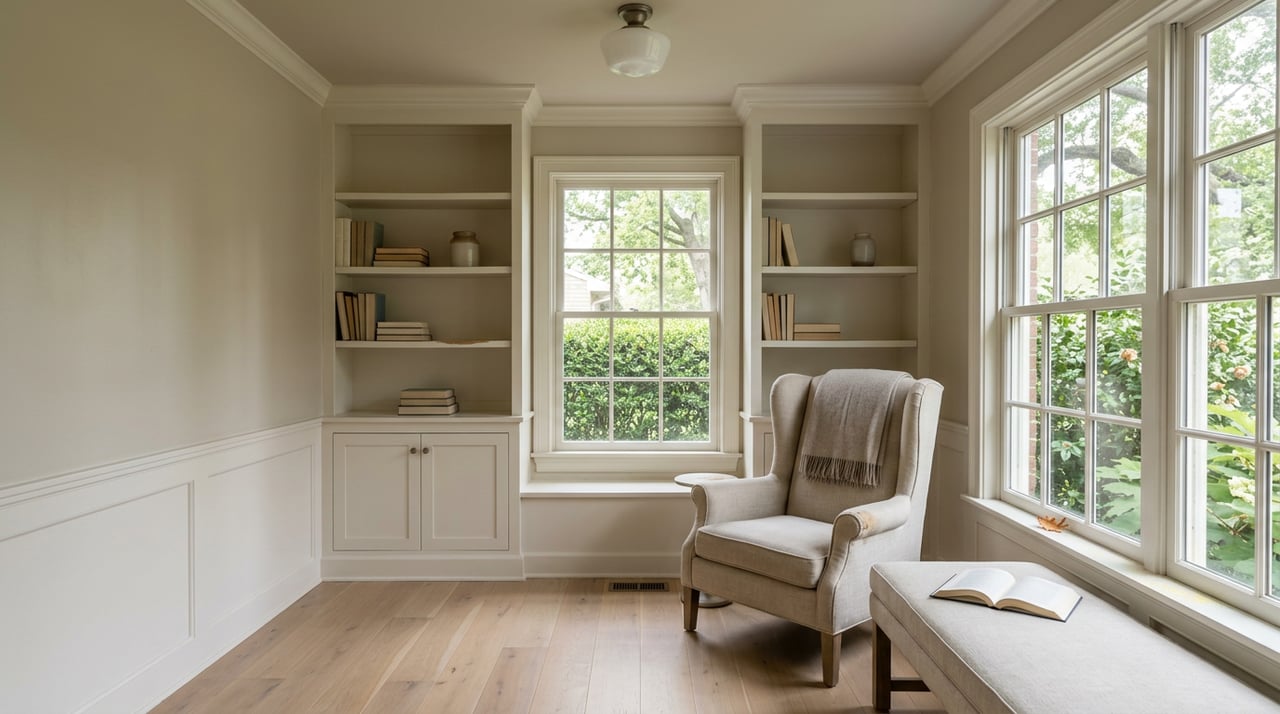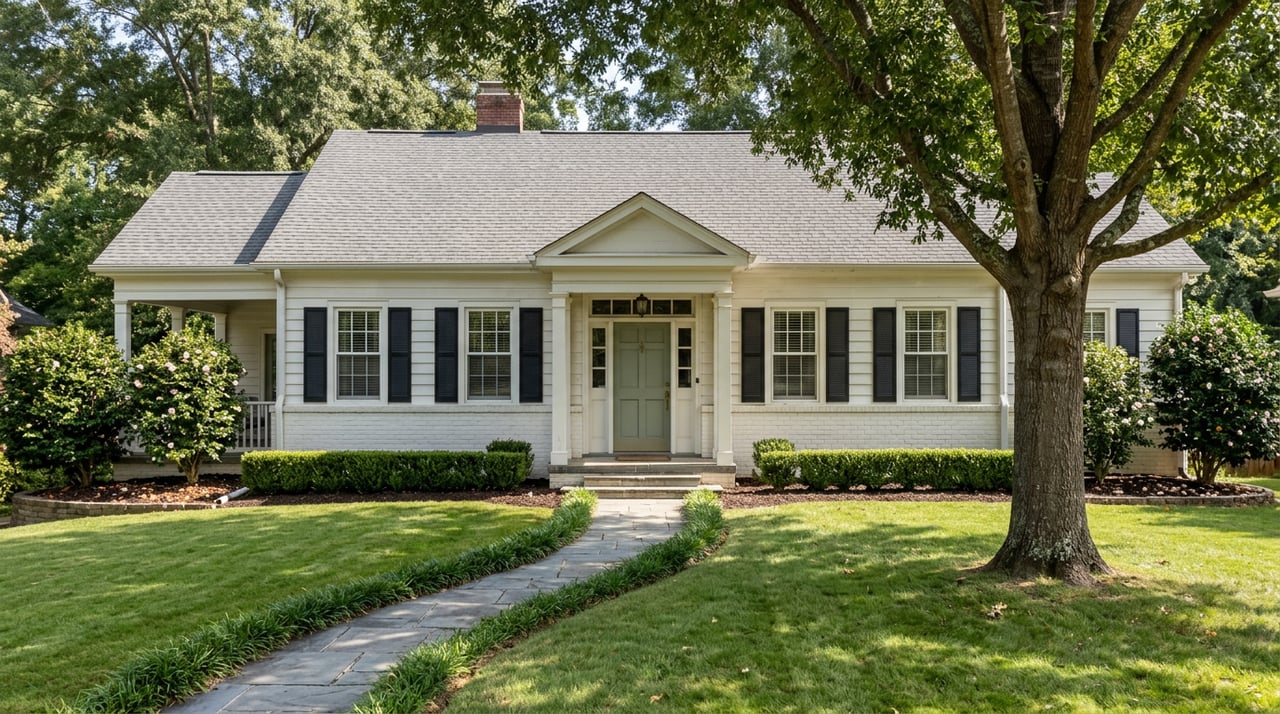
Back in 2008, a house at 930 West Markham Avenue in Trinity Park came down. Not because it had to. Neighbors who watched it happen say the foundation had problems, the kind that scare off buyers who want a fixed price and a fixed timeline more than they want a hundred-year-old floor plan. A new build went up in its place. The story got documented, argument by argument, on Open Durham's community history site, where residents traded theories about why renovation kept losing to demolition on a block full of houses just like it.
The uncomfortable part isn't that one house came down. It's that nothing in Trinity Park stopped it, and nothing currently does. Two blocks away in Watts-Hillandale, the same decision would trigger a mandatory year-long delay and a review board. Same era of house, same city, same general price range on paper. Different rules entirely.
If you're comparing Durham's close-in historic neighborhoods (Trinity Park, Watts-Hillandale, Duke Park, Old North Durham, Morehead Hill) by median price and a shared "historic" label, you're comparing the wrong thing. The number that actually predicts what your investment looks like in ten years isn't on the listing sheet. It's a designation status you have to look up separately.
The Fork in the Road That Doesn't Show Up on a Listing Sheet
Durham currently lists eight neighborhoods as Local Historic Districts: Trinity Heights, Watts-Hillandale, Morehead Hill, Holloway St., Golden Belt, Fayetteville St., Downtown Durham, and Cleveland St. Local Historic District status isn't a plaque or a marketing phrase. It's a zoning overlay applied by the city that requires exterior changes to go through Historic Preservation Commission review, and it imposes up to a 365-day delay before a contributing structure can be demolished.
Trinity Park has none of that. It's on the National Register of Historic Places, which sounds like the same thing but functions completely differently. National Register listing is an honor. It documents architectural significance. It does not stop a bulldozer. Local designation is regulation. It can.
This isn't an oversight. Trinity Park has debated becoming a Local Historic District more than once, and the Trinity Park Neighborhood Association's own recap of one such meeting shows residents hearing directly from people who work in this exact tension. Karla Rosenburg walked the room through what local designation would and wouldn't restrict, noting that the review criteria govern how new construction relates to what's already on the street, not property lines, and that the designation wouldn't block rear-lot additions or the kind of duplex and small-apartment infill the city calls "Missing Middle" housing. Sara Lachenman, a preservationist who runs Four Over One Preservation and Design Services, and Tony Sease, a Trinity Park resident who also serves on the Durham Planning Commission, both spoke to the tradeoffs. So did David Berger, a Duke economist who lives in the neighborhood. One line from that meeting has stuck with residents since: "No matter what we do, prices are going up because of our location."
That's the paradox. Trinity Park's proximity to Duke's East Campus and downtown is exactly what makes it valuable and exactly what makes it a target for teardowns, because the land underneath an aging bungalow is worth more to some buyers than the bungalow itself. Local designation would slow that math down. So far, the neighborhood association has repeatedly chosen not to pursue it, partly out of concern that added review would make routine maintenance and renovation more expensive and slower for the owners who are already there.
Why This Changes What You're Actually Buying
If you're weighing Trinity Park against Watts-Hillandale as a move-up buyer or a relocating professional, you're not choosing between two flavors of the same charm. You're choosing between a neighborhood where a future owner two doors down can legally demolish and rebuild with only standard zoning limits on size and setback, and one where that same decision requires a formal review and a year of runway. That difference shows up later as street character, and it shows up now as risk to whatever you renovate.
It cuts both ways for owners already inside a Local Historic District. Protection against a neighbor's teardown also means your own exterior changes, a new roofline, replacement windows, an addition visible from the street, go through the same Historic Preservation Commission review. That's a real cost in time, even when the outcome is a stronger, more predictable neighborhood ten years from now.
What the Median Price Won't Tell You
Even inside a single neighborhood, "the median" is doing less work than it appears to.
Trinity Park sells so few houses in a given month that its reported median swings wildly depending on which snapshot you catch. One tracking service showed just five closed sales in March 2026, up from a single sale in March a year earlier, at a reported median of $445,000. A separate neighborhood-level snapshot covering a similar window put the Trinity Park median between $772,000 and $880,000. Same neighborhood, same rough period, two numbers that aren't in the same conversation. That's not a data error. It's what happens when a "median" is built from a handful of trades a month in a neighborhood built between the 1890s and 1960, where a 900-square-foot cottage and a fully restored four-bedroom can sit three doors apart.
Duke Park tells a version of the same story with a bit more volume behind it. Recent tracking put its trailing 12-month median around $460,000, up from a lower base the year before, while a July 2025 snapshot from the same tracking service put the median closer to $550,000. A separate neighborhood value analysis put Duke Park's median near $480,000 and noted that recent sales themselves ranged from about $340,000 for smaller, unrenovated homes to more than $1 million for fully renovated properties on the same streets. The gap between those individual sales isn't noise. It's the price of the renovation itself, priced in, and it's wider than any single median suggests.
| Neighborhood | Snapshot Window | Reported Median | What's Behind the Number |
|---|---|---|---|
| Trinity Park | March 2026 | $445,000 | 5 closed sales |
| Trinity Park | Similar 2026 window, different source | $772,000–$880,000 | Small sample, model-based |
| Duke Park | Trailing 12 months, mid-2026 | ~$460,000 | Broader sales base |
| Duke Park | July 2025 snapshot | ~$550,000 | Different time window |
The practical takeaway: in these low-volume historic pockets, the neighborhood median is a starting point at best. What actually tells you what a specific house is worth is the condition of the last three or four comparable sales on the same or adjacent blocks, not a monthly aggregate built on a handful of closings.
What This Means If You're the One Deciding
If you're touring houses in Trinity Park, Watts-Hillandale, Duke Park, or Old North Durham this fall, two questions matter more than the number on the listing.
First, is the specific address inside a Local Historic District boundary, not just inside a neighborhood with historic character. LHD boundaries don't always match neighborhood boundaries exactly. The city's parcel lookup tool will show whether a property has an existing Certificate of Appropriateness on file, which tells you whether it's already under that review process.
Second, if you're buying with renovation plans, price the approval timeline into your decision the same way you'd price a roof or a foundation. A kitchen remodel behind an unchanged exterior moves at the speed of a normal permit in any of these neighborhoods. A visible addition or a new roofline moves at a different speed entirely inside an LHD, and that timeline is worth a phone call to the city before you write an offer, not after.
A Few Direct Questions
Does National Register listing protect a house from demolition? No. It documents historical significance and can support things like tax credits, but it carries no regulatory power to stop demolition. Only Local Historic District designation does that, and only in the neighborhoods that have it.
How do I find out if a specific Durham address is inside a Local Historic District? The city maintains parcel-level records through its mapping tool, and the current list of designated districts is public. Checking the exact parcel matters more than checking the neighborhood name, since boundaries can be more specific than the commonly used neighborhood label.
Does buying inside a Local Historic District mean I can't renovate? No. It means visible exterior changes go through a review process designed to keep new work compatible with the block, not to prevent it. Interior renovations and changes not visible from the street generally aren't part of that review.
Whether you're comparing Trinity Park against Watts-Hillandale for the first time or you already own on one of these blocks and are wondering what your renovation dollar is actually protecting, the designation status matters as much as the address. If you want a read on what a specific Durham property is worth once condition, location, and that regulatory status are all accounted for, reach out to Whalen & Co. and request your home valuation.