The 30-year fixed mortgage averaged 7.40% as of October 8, 2026, according to Freddie Mac's Primary Mortgage Market Survey. A year earlier the average was 6.30%. On the same weekend, a buyer touring new construction in Wake Forest can find model homes advertising 4.99% fixed rates and a 3.875% adjustable rate. A resale seller down the road can't offer the same thing on the same terms, and the reason comes from a specific line in the lending guidelines.
Builders can fund those rates through a pool of money they lock in with a lender before you ever sign a contract. Fannie Mae doesn't count that kind of arrangement against the seller-contribution caps that bind every resale seller. For a buyer comparing a new build with a resale home, the useful comparison is the full loan each house comes with, and the price is only one part of it.
What Wake Forest Builders Are Advertising This Fall
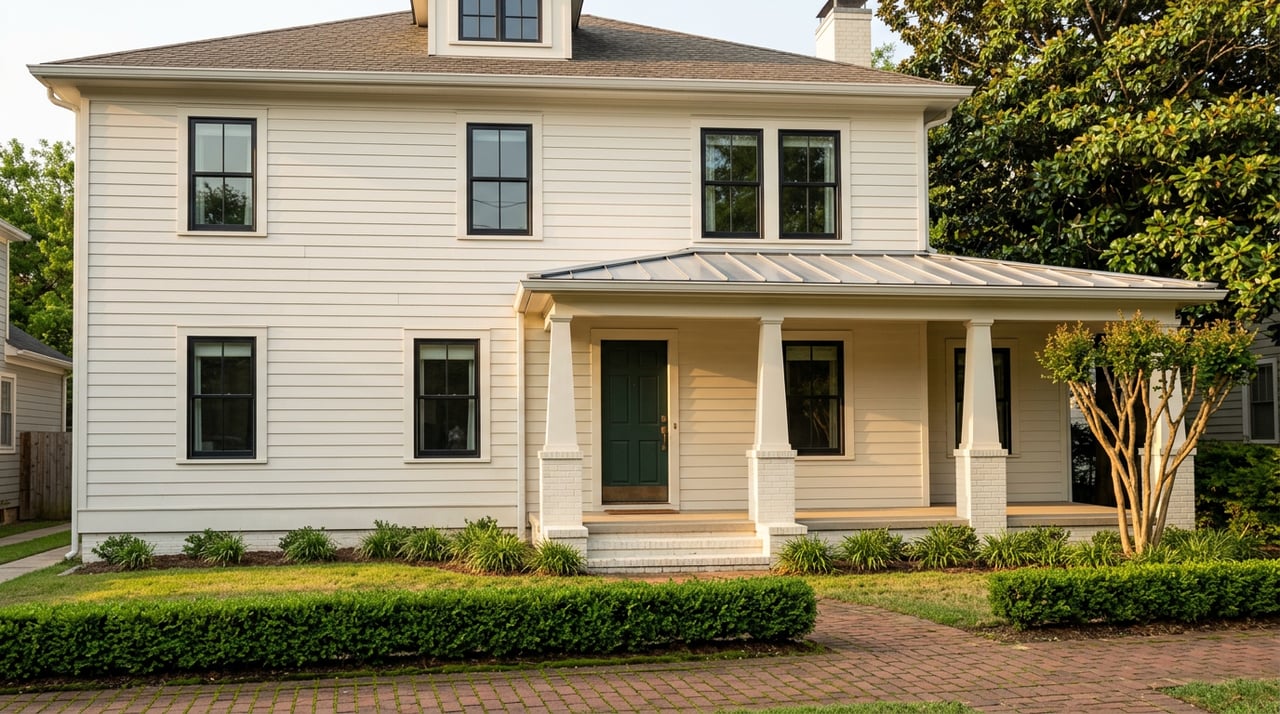
At D.R. Horton's Kalas Falls, off Rolesville Road, homes are listed from $544,490. The community page shows markdowns from $646,305 to $618,740 and from $641,805 to $593,990. The same page carries two financing offers for certain homes in select North Carolina communities. Other builders around town are advertising their own versions.
| Builder and community | Advertised rate | Conditions printed with the offer |
|---|---|---|
| D.R. Horton, Kalas Falls | 3.875% 5/1 FHA or VA ARM | Contract on or after 9/25/26, close by 12/31/26, financed through DHI Mortgage |
| D.R. Horton, Kalas Falls | 4.99% FHA fixed, 5.697% APR; 5.50% conventional fixed, 5.939% APR | Contract on or after 10/5/2026, close by 12/31/2026, DHI Mortgage |
| Eastwood Homes, Raleigh division | As low as 4.99% fixed | Select completed homes bought at full price, loan closes by 12/1/2026, Sabal Mortgage |
| Davidson Homes, Sage on North Main and Rockport | As low as 4.99%, 6.278% APR, plus Flex Cash | Terms and conditions apply |
| Homes by Dickerson, Lowery Estates and Thompson Mill Road | 5.8% fixed | Twin State Lending, builder's preferred closing attorney, contract within 30 days, close within 60 days |
Eastwood's promotion page includes Enclave at Traditions Townhomes, a 37-townhome community in Wake Forest, in its list of communities, but it shows the homes there as ready to build. The offer covers only completed homes, so you'll need to ask which homes in Wake Forest, if any, qualify. Davidson lists Sage on North Main from the $490s to the $650s and Rockport from the $750s to the $990s. The Homes by Dickerson pages show no publication or expiration date, so treat that 5.8% figure as something to confirm with the builder, not a standing offer.
The Freddie Mac benchmark measures a conventional loan with 20% down and excellent credit, so an FHA rate isn't a perfect match against it. Even so, a 4.99% fixed rate sits about two and a half points below the week's 7.40% average. That gap is too large for a seller's credit to cover the usual way, which leads to the rule that makes it possible.
The Sentence in Fannie Mae's Guide That Makes It Work
Every mortgage program limits how much an "interested party," such as the seller, can contribute toward the buyer's costs. When a seller pays to buy down the rate, temporarily or permanently, that money counts against the cap. The Fannie Mae Selling Guide then adds this note:
Standby commitment (also known as forward commitment) agreements between a builder and lender for blanket interest rate coverage that are executed prior to signing a sales contract with a borrower are not subject to Fannie Mae's maximum financing concessions because they are not attributable to the specific loan transaction.
Freddie Mac's guide has a matching provision. D.R. Horton's Kalas Falls disclosure describes this setup directly. The builder "has locked-in, through DHIM, a fixed interest rate for a pool of funds," and the rate lasts "until pool of funds is depleted or rate expires." Eastwood's offer runs through Sabal Mortgage "under a forward rate commitment."
The builder buys the discount in bulk ahead of time, for a whole batch of loans, before any buyer is attached. Because the money isn't tied to your specific purchase, it doesn't count toward your loan's concession limit.
What a Resale Seller Can Put on the Table
A homeowner selling a four-bedroom near downtown Wake Forest has no blanket commitment to draw on. Any help they give toward a buydown is tied to one buyer and one loan, so it falls under these limits:
- Conventional, Fannie Mae and Freddie Mac: 3% of value when the loan-to-value ratio is above 90%, 6% between 75.01% and 90%, and 9% at 75% or below, for a primary residence or second home
- FHA: up to 6% of the sales price, and that 6% includes any temporary or permanent buydown
- VA: ordinary closing-cost credits aren't capped, but seller concessions are limited to 4% of the VA reasonable value, and VA treats a seller-funded temporary buydown as a concession, according to its closing-cost guidance and temporary buydown page
Fannie Mae measures its percentage against the lower of the sales price or the appraised value. Customary seller-paid costs don't count toward it. If the seller contributes more than the cap, the extra is treated as a sales concession and reduces the price used to calculate the loan-to-value ratio.
A temporary buydown is often the most a resale seller can realistically offer. The VA's own 2/1 buydown example shows the cost. On a loan with a 5% note rate and a $1,610 monthly payment, the payment drops to $1,265 in year one at 3% and $1,432 in year two at 4%. The money is placed in escrow up front and drawn down month by month. Adding up the monthly differences gives roughly $6,276. That fits under every cap on the list. It also stops after 24 months, and from then on the buyer pays the full note rate.
The Conditions on the Builder's Rate
The builder's rate has its own limits, and they show up in the fine print.
- You must use the builder's lender. D.R. Horton says buyers aren't required to finance with DHI Mortgage, "however, buyer must use DHIM to receive the advertised rate." Eastwood's terms say financing through another lender "is not eligible for this promotion." Homes by Dickerson also requires its preferred closing attorney.
- Price negotiation may be limited. Eastwood's offer applies to "select, completed homes purchased at full price." D.R. Horton says its rate "may not be able to be combined with other available D.R. Horton offers or discounts."
- The deadlines fall this year. Eastwood loans must close by December 1. D.R. Horton's offers close by December 31. That favors homes that are finished or close to it.
- You may still pay points. D.R. Horton's rate "may require borrower to pay points to obtain the advertised rate." Eastwood's advertised rates assume credit scores of at least 680 for FHA and VA and 740 for conventional.
- You qualify at the full rate. Some of Eastwood's advertised rates use a 2/1 temporary buydown, which cuts the rate by about two points in year one and one point in year two. Buyers "must qualify at the full note rate." Fannie Mae requires the same for every temporary buydown.
The 3.875% ARM needs the most careful reading. The rate is fixed for five years and then adjusts every year. The first adjustment and each later one are capped at 1%, and the lifetime cap is 5%. D.R. Horton lists a fully indexed rate of 6.540% today and a maximum rate of 8.875%. The low payment lasts five years. After that, the cost depends on where the index has moved.
Why the Price on the Deed Can Look Steady
A rate subsidy doesn't change the sales price recorded on the deed. Wake County's Register of Deeds reported a countywide median transaction price of $450,000 for September 2026, up from $440,000 in August, across 5,969 recorded transactions. That median is based on recorded transfers, so a home that sold at full price with a 4.99% builder rate shows up the same way as one that sold at full price with no help.
Statewide, NC REALTORS described September 2026 as a balanced market. Inventory stood at 5.93 months and was up 3.5% from a year earlier, while closed sales fell 11%. When rates are rising and buyers have more homes to choose from, a builder's financing offer competes directly with the resale homes nearby. The two kinds of homes sell under different rules.
For a resale seller, that changes the math. A price cut, a seller credit that stays within the cap and a 2/1 buydown are all real tools, and each one shows up somewhere in the deal. The useful question is what the buyer's payment looks like in year one, year three and year six under each option, compared with the builder's terms.
A Few Direct Questions
Can I take the builder's rate and use my own lender? Not under the offers listed here. D.R. Horton and Eastwood both say the advertised rate requires their named lender.
Is a builder's 4.99% the same thing as a seller-paid 2/1 buydown? Sometimes it's a permanent fixed rate, and sometimes it's a temporary buydown. Eastwood says some of its advertised rates use a 2/1 structure. Ask which kind you're being offered before you compare payments.
Does a seller credit above the cap simply get refunded? No. Under Fannie Mae's rules, the excess is treated as a sales concession and reduces the price used to calculate the loan-to-value ratio.
If you're selling a Wake Forest home while new-construction communities nearby are advertising rates below market, Whalen & Co. can show you what a buyer's payment would look like under a price adjustment, a capped seller credit or a temporary buydown, and compare each with the builder offers closing before year-end. Request your home valuation, and we'll start with the payment math.
This article is general information, not legal, tax or financial advice. Consult a qualified professional about your situation.