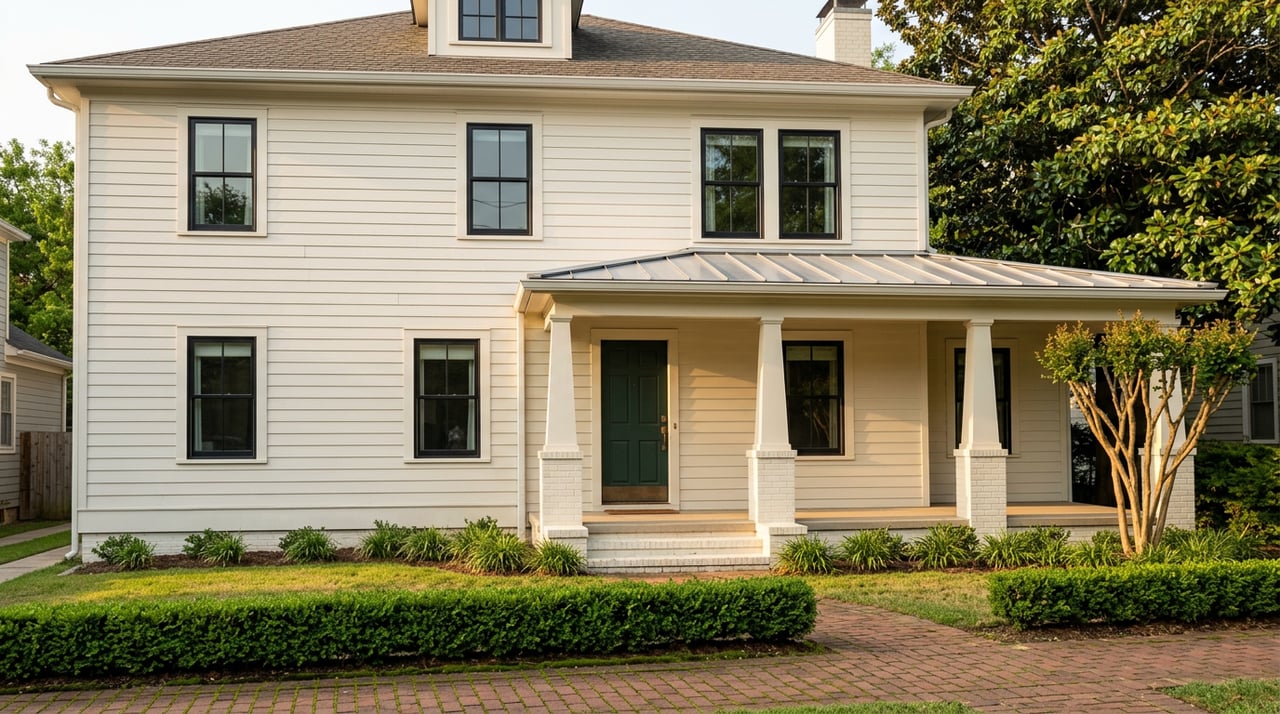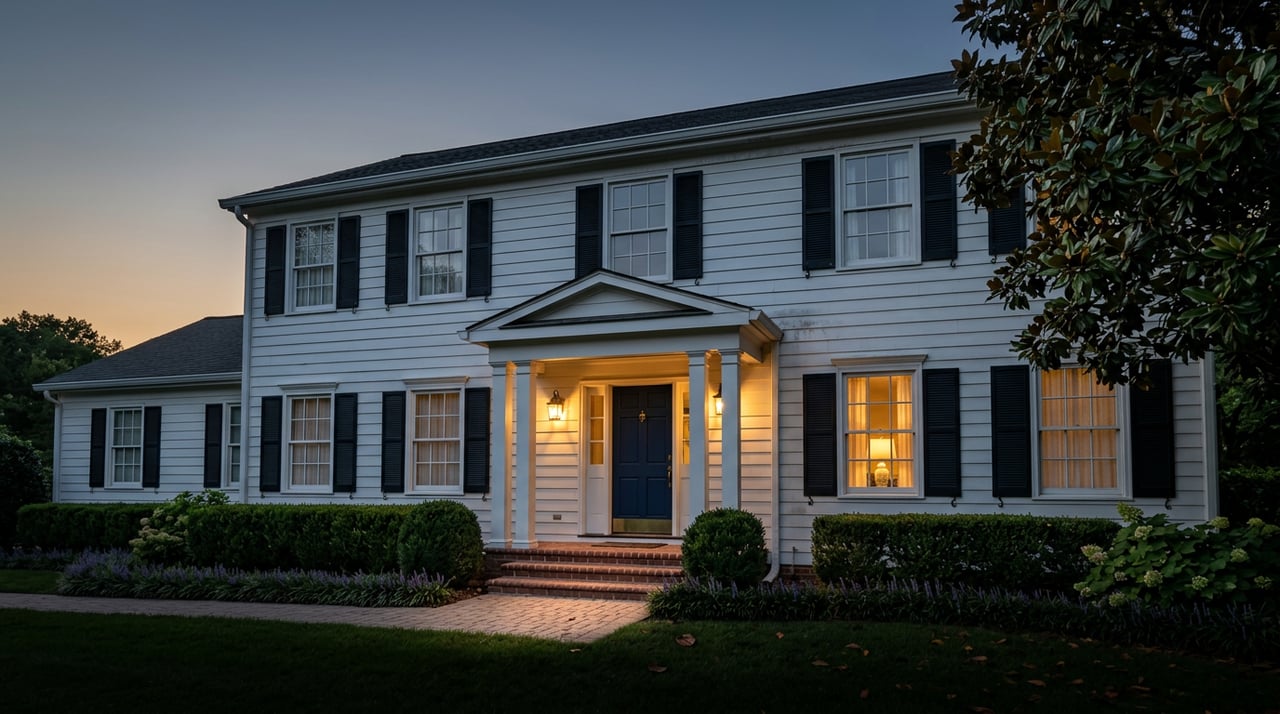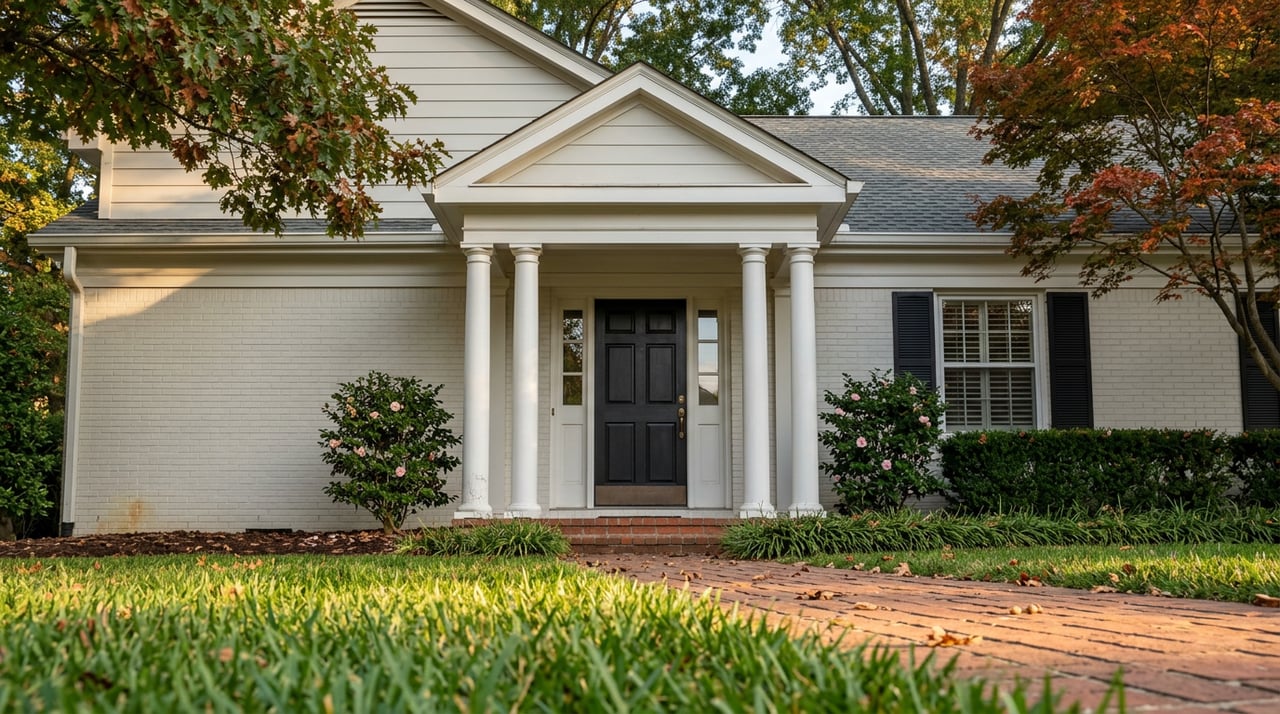
A due diligence fee in North Carolina is a payment made directly to the seller when the contract is signed, and in most cases the seller keeps it if the buyer later terminates during the due diligence period. Many buyers who move to Cary from other states have not encountered anything like it. In a market as tight as Cary's, the way an offer divides its upfront money between that fee and the escrowed earnest money next to it can carry real weight with a seller, alongside the sale price.
The Two Checks Nobody Explains the Same Way Twice
North Carolina's standard residential contract, Form 2-T, splits a buyer's upfront money into two pieces that behave nothing alike. Earnest money goes into an escrow account, usually held by a closing attorney, and comes back to the buyer if they cancel within their rights during the due diligence period. The due diligence fee goes straight to the seller at the moment the contract is signed, and in most cases it is not coming back.
The North Carolina Real Estate Commission's own bulletin on the subject spells out the narrow exceptions: a buyer only recovers the fee if the seller materially breaches the contract, if the buyer terminates under the seller-obligations clause, or if the property is destroyed or materially damaged before closing. Outside those situations, walking away during due diligence for any reason at all, a bad inspection, a change of heart, a better house down the street, means the seller keeps the fee.
There is no formula for how large that fee needs to be. It is negotiated, house by house, and its size has historically tracked how much competition exists for that specific property. When the Commission added the fee to the standard contract in 2011, the Triangle was deep in a buyer's market, and the fee was easy to negotiate down to almost nothing. Competition returned, and the fee started doing real work again. During the 2021 to 2023 run, due diligence fees on the hottest Triangle listings climbed into the $20,000 to $50,000 range. By 2026, on mid-range properties across Raleigh, Cary, and Apex, that number has settled back down to something closer to $500 to $5,000, with $2,000 to $10,000 still typical on well-priced homes in desirable areas where multiple offers remain routine.
That last clause is where Cary buyers need to slow down, because "moderated" is not the same as "not competitive."
What Cary's Own Numbers Say About How Tight This Still Is
Cary's most recent six-month window of tracked closings, updated as of September 6, 2026, put the median sold price at $615,000 across 1,327 closings, with the middle half of those sales landing between $468,500 and $827,000. That spread is the more useful number of the two. A home at the top of that range and a home at the bottom are not competing in the same market, even though they share a citywide median.
Zoom into how fast those homes are moving and the picture gets tighter, not looser. As of a June 2026 snapshot, Cary carried only about 1.04 months of housing supply, and roughly 36 percent of homes sold above their asking price. Homes were going under contract in a median of 16 days over the three months ending in June, receiving an average of two offers each. For comparison, homes in nearby Apex over that same window took nearly twice as long to sell.
None of that reads like a market where a buyer can safely default to the bottom of the "moderated" due diligence range and still win.
The Submarket Split Nobody Averages Correctly
Cary's citywide numbers also hide something that matters more to an actual offer strategy: West Cary and East Cary are behaving like two different markets wearing the same zip code.
| Submarket | Median sale price, 3 months ending June 2026 | Avg. offers per listing | Median days on market |
|---|---|---|---|
| West Cary | $730,000 (up 5.7% year over year) | 1 | 18 |
| Cary, citywide | $645,000 (down 0.75% year over year) | 2 | 16 |
| East Cary | $585,000 (down 3.3% year over year) | 2 | 12 |
West Cary is appreciating fastest while drawing the fewest competing offers, which suggests sellers there are pricing accurately from the start rather than inviting a bidding war. East Cary is moving faster and drawing more offers per listing even as its median price slips, which is closer to what a genuine mix shift looks like: more of what is selling there recently sits lower on the price ladder, pulling the median down without any individual home losing value. Doorify MLS figures for Cary in July 2026 show this same pattern: closed sales up 22.4 percent year over year, the median price down 8.5 percent, but price per square foot down only 2.6 percent and homes still moving in a median of 17 days. When sales volume rises and the pace stays fast while the median drops that much harder than the per-square-foot figure, the story is which homes are transacting, not what any one of them is worth.
That distinction changes what a buyer should read into a listing's asking price in each submarket, and it changes what a due diligence fee needs to signal there too.
Where the Fee Does the Most Talking
Cary's older, established neighborhoods do not all compete the same way. In Preston and Amberly, homes in the roughly $700,000 to $1.1 million range turn over rarely, often once a decade or longer, which means a buyer who finds the right listing is competing for something genuinely scarce and has fewer future chances to try again. In MacGregor Downs, where homes in the $450,000 to $800,000 band turn over closer to every five to seven years, multiple offers on a well-priced listing are common enough that buyers should expect them by default. Carpenter Village sits at a different price point entirely, generally $350,000 to $600,000, where the pool of comparable buyers is different and the fee that wins there looks nothing like the fee that wins in Amberly.
The mechanism underneath all three is the same. Because a due diligence fee is money the seller can bank within days regardless of what happens next, while earnest money sits in escrow and is contingent on the same window the buyer controls, a seller comparing two similarly priced offers has a rational reason to prefer whichever one puts more money into the nonrefundable column. A buyer who offers $5,000 in earnest money and $1,000 in due diligence money is, on paper, offering the same $6,000 as a buyer who reverses that split, but the seller is not looking at the same $6,000. One buyer's $6,000 could walk back out the door tomorrow. The other's mostly can't.
In a scarce, low-turnover pocket like Preston or Amberly, that split matters even more, because there may not be another comparable listing for years. In East Cary, where 12-day median market times mean a seller has little patience for a buyer who might use a long inspection window as a stalling tactic, a strong due diligence fee paired with a short due diligence period sends the clearest signal a buyer can send without simply raising the price.
The Clock Attached to the Money
Once the due diligence deadline passes, the standard contract carries no financing contingency. A buyer whose loan falls through after that date generally forfeits both the fee and the earnest money.
Cary's own closings show a median gap of 33 days between contract and closing over the trailing six months tracked as of September 2026, meaning there is real time between the due diligence deadline and the day the loan actually has to fund. That gap is a good reason to have financing fully underwritten before the due diligence date arrives, since the contract's financing protection does not extend past that deadline.
A Few Direct Questions
Can I ever get my due diligence fee back if the inspection turns up something bad? No, not on that basis alone. The fee is designed to compensate the seller for taking the home off the market during your inspection window, and a disappointing inspection is not one of the narrow exceptions that trigger a refund.
Is a bigger due diligence fee legally required to make my offer competitive? No. It is a negotiated term, not a mandatory one. But sellers evaluating similar offers are rationally inclined to favor the one where more money is unconditionally theirs, which is why the fee tends to do outsized work in a tight market even though nothing in the contract requires it to be large.
How is this different from what I experienced buying a home somewhere else? Most states use earnest money as the only upfront deposit, and it is generally refundable if an inspection reveals a problem. North Carolina's due diligence fee has no real equivalent elsewhere, which is exactly why it catches relocating buyers off guard on their first Triangle offer.
If you are getting ready to write an offer in Cary this fall and want to work through the right split between due diligence money and earnest money for the specific block you are targeting, Whalen & Co. can walk through that math with you before you sign anything.