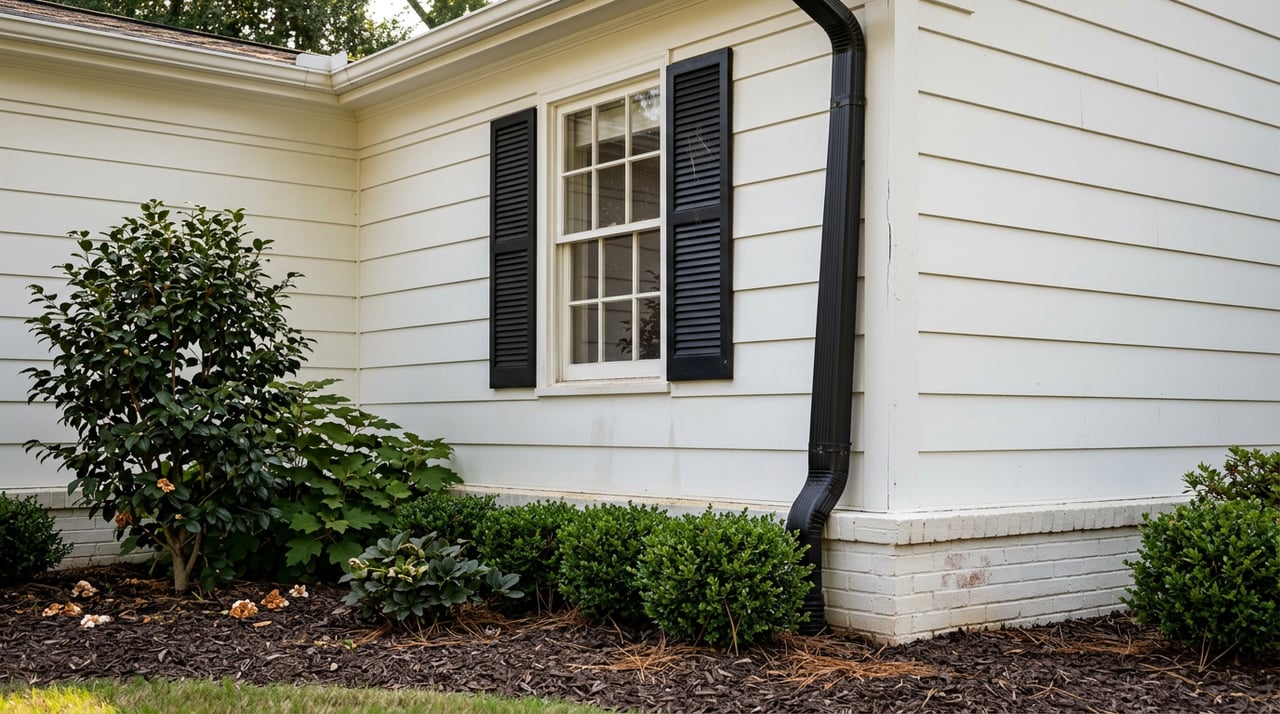
A new fence in Historic Oakwood goes through the same city review as a two-story addition. Same paperwork, same waiting, same possibility that the project you thought was routine turns into something that needs a hearing. If you own, are buying, or are getting ready to sell a home inside one of Raleigh's eight local historic districts, the surprise isn't that the city has rules. It's that staff cannot deny a Minor Work request; it can be modified or sent to the committee for a decision. Either path can take time, so it is worth planning for the review timeline.
That distinction matters right now. Raleigh changed how this process works on January 2, 2026, adopting text change TC-3-24 to bring its Certificate of Appropriateness ordinance into compliance with state law. If you're timing a listing, a closing, or a renovation around a calendar this year, the mechanics behind that change are worth understanding before you start.
Two Paths for Historic District Exterior Work
Most exterior changes to a property inside a Historic Overlay District, whether that's Oakwood, Boylan Heights, Capitol Square, Moore Square, Blount Street, Glenwood-Brooklyn, Oberlin Village, or Prince Hall, need a Certificate of Appropriateness before work begins, regardless of what other city permits also apply. Ordinary maintenance or repair that doesn't change the design, materials, or outward appearance doesn't require a COA. There are two tracks. Minor Work COAs get reviewed administratively by city preservation staff. Major Work COAs go to the COA Committee, a quasi-judicial body that holds an evidentiary hearing once a month.
Here's the part that changes how you should think about the whole process:
Staff cannot deny a COA request.
That's not a summary. That's the city's own language describing the Minor Work track. If your project doesn't fit the district's design guidelines, staff doesn't reject it. They work with you to modify it until it does, or they convert it to a Major Work application for the committee to decide. Either way, the application doesn't die. It just moves, and moving takes time you may not have budgeted.
How COA Review Timelines Differ
The practical consideration is how long each review path takes.
| Path | Who reviews it | How often it meets | Typical timeline |
|---|---|---|---|
| Minor Work COA | City preservation staff, administratively | Rolling, no monthly bottleneck | Staff works the application toward approval; no fixed denial point |
| Major Work COA | COA Committee, evidentiary hearing | Once a month, typically the fourth Thursday at 5 p.m. | 10 to 14 weeks for a complete application |
If your project is converted to Major Work, the review moves from a rolling administrative process to a monthly hearing slot. For a seller trying to close a renovation before listing, or a buyer trying to finish work before move-in, that conversion can extend a project's timeline.
A Fence Is Not a Small Project Here
Consider a homeowner in Oakwood replacing a four-foot painted wood fence with a four-foot cedar picket fence. The height is the same, but the design and material change. Inside a historic district, it still requires a Certificate of Appropriateness because the property sits inside a district boundary, not because the fence itself is unusual.
According to a detailed permit guide covering Raleigh's process, that COA review typically adds two to six weeks on top of the standard permit timeline, with the permit itself running roughly $75 to $125. The review timeline is an additional factor to consider when planning the project.
There is a real exception worth knowing: ordinary maintenance or repair that doesn't change the design, materials, or outward appearance of a feature doesn't trigger a COA at all. Repainting the same color, patching the same siding, that kind of upkeep stays outside the process entirely. The line is drawn at whether the work changes what the house looks like from the street, not at how big the project feels to the person doing it.
What Changed on January 2, 2026, and Why It Matters Now
TC-3-24 wasn't a routine housekeeping update. The Planning Commission's certified recommendation on the change stated plainly that without it, the city would not be in compliance with state law. The adopted ordinance text touches how the COA Committee's jurisdiction is defined, how hardship exceptions get evaluated when a property's own conditions, like an odd lot shape or limited material availability, make full compliance unreasonable, and how the ordinance references the Design Guidelines for Raleigh Historic Districts and Landmarks and the Secretary of the Interior's Standards as the technical basis for every decision.
For anyone with a live application in 2026, that means the goalposts staff and the committee are measuring against were rewritten this year. A renovation plan drafted against last year's understanding of the ordinance is being reviewed under the current one, which is one more reason to confirm your project's status directly with the city's Historic Preservation Planning Unit rather than relying on a contractor's or prior owner's memory of how things used to work.
The Approval Isn't Always the Last Word
A report by The National Law Review describes a decade-old Oakwood case that's still worth knowing if you're thinking about starting construction the moment a COA comes through. In September 2013, the RHDC approved a Certificate of Appropriateness for a modernist home at 516 Euclid Street. The following month, a neighbor filed a timely appeal. The homeowner pulled his building permits and began construction anyway while that appeal was pending. The Board of Adjustment deferred the case in January 2014 to review the evidence, then in February 2014 voted 3 to 2 to reverse the RHDC's decision, overturning the certificate after construction was already underway.
The details are specific to that case, but the lesson generalizes: a COA approval can still be appealed. If your renovation timeline depends on a firm approval date, treat the appeal window as part of the timeline, not as an afterthought.
The Credit Most Owners Forget to Ask About
The review process takes time, but it comes with an upside that owners preparing to sell often overlook. Contributing properties inside Oakwood's National Register Historic District may be eligible for federal and state historic tax credit programs. That's separate from the local Historic Overlay District designation that triggers the COA requirement, and it's worth confirming before, not after, you decide whether a renovation pencils out ahead of listing.
A Few Direct Questions
Does interior work need a Certificate of Appropriateness? No. The COA requirement applies to exterior changes only. Interior renovations don't go through this review.
What if I just want to repaint my house the same color? Ordinary maintenance and repair that doesn't change the design, materials, or outward appearance of the property doesn't require a COA.
Is my property actually in a historic district? The city's iMAPS tool lets you search a specific address and shows locally designated properties with a hatch pattern once the Historic Overlay District layers are turned on. It's the only way to know for certain, since National Register status and local Historic Overlay District status are separate designations with different boundaries in some cases.
If you're weighing a renovation against a listing date, or looking at a historic Raleigh property and trying to understand what you'd actually be able to change after closing, that's exactly the kind of timeline math worth working through before you're under contract. Whalen & Co. spends a lot of time in Raleigh's historic neighborhoods and can walk you through what a specific address's designation means for your plans. Request Your Home Valuation and let's talk through the timeline together.
This article is general information, not legal, tax or financial advice. Consult a qualified professional about your situation.